
Between appointments, families hold the story.
Baby Kangoo explores how family-held information can support continuity between home and healthcare.
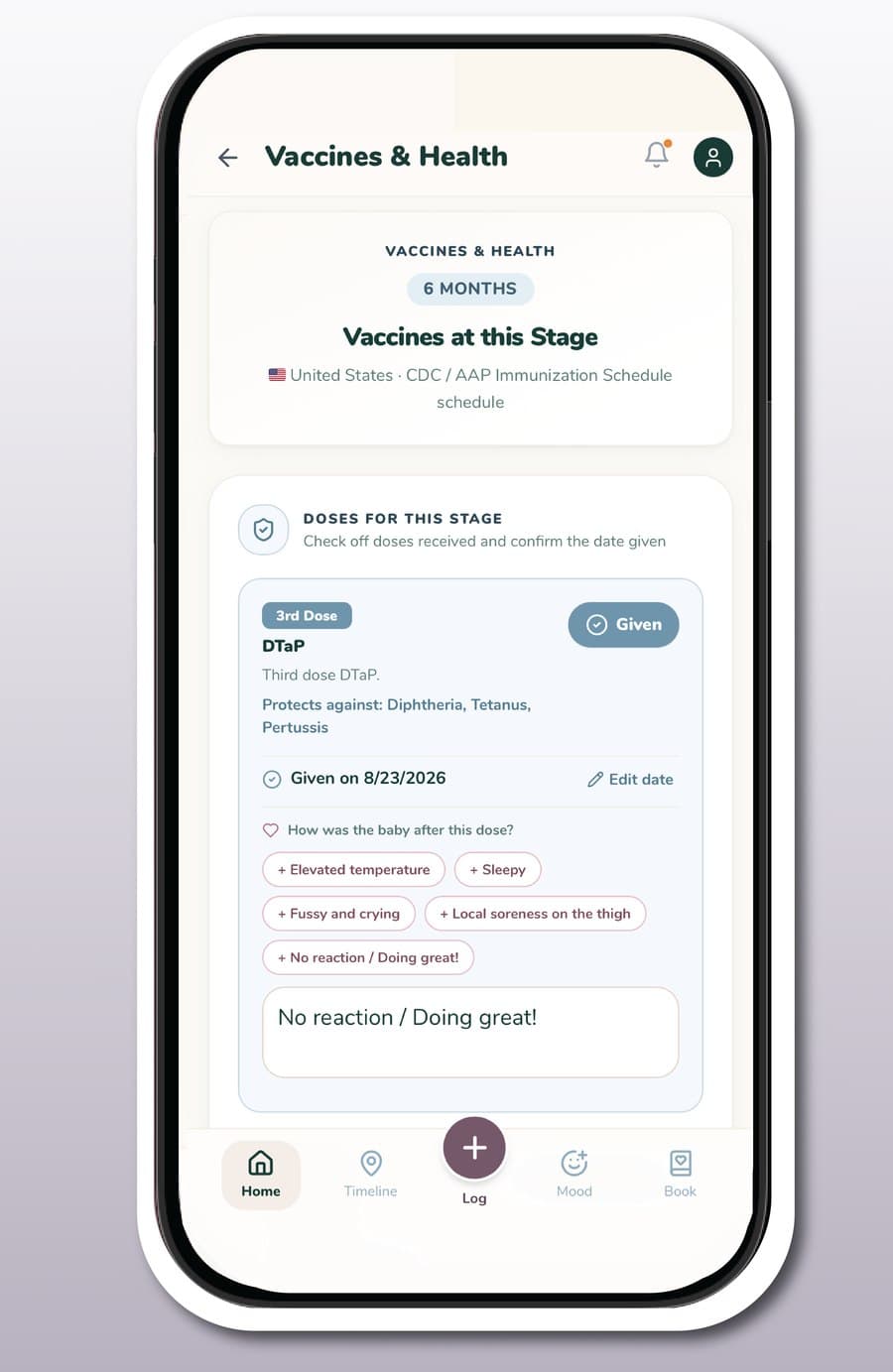
Baby Kangoo Health area
"Parents do not need a copy of the medical record. They need a way to remember, organize and carry their child’s health context over time."
A family-held information layer between home and healthcare.
Baby Kangoo at a glance
A family-centred platform for organizing memory, development and health over time.
Baby Kangoo is a family-centred digital platform created to organize the child's story over time — without turning childhood into a spreadsheet.
The idea also grew out of closeness with professionals in the pediatric field, and the observation of a recurring challenge: much of a child's life happens between appointments. A change in routine, a new behavior, a passing symptom, a question or a small achievement can matter to the family, but aren't always recorded or remembered by the time it's time to talk to a professional.
Baby Kangoo creates a space in the family's everyday life to preserve these moments and bring them together into a continuous story — useful for remembering, following along, and arriving better prepared for different moments of care.
Available in Portuguese, English and Norwegian, the platform is already in production and continues to evolve alongside real families.
- Memory, development and health in the same context
- Built for families' everyday reality
- Active platform, available in three languages
Healthcare systems are built to record clinical care. But an important part of a child's story happens outside them: at home, between one appointment and the next.
A symptom shows up, a routine changes, guidance is given, a question comes up, and small patterns start to form. This information often stays scattered across memory, notes, photos and different moments of care.
For families, this can mean trying to reconstruct events right when they're worried or short on time. For professionals, it can mean receiving incomplete accounts with no clear sequence. Baby Kangoo aims to give structure to the context families already observe and carry with them.
- Important information arises between appointments
- Families need to reconstruct events from memory
- Context can be lost between different moments of care
A symptom can start quietly long before a family sees a doctor. During the appointment, the professional may ask when it appeared, whether it happened before, or whether some change in feeding, routine, sleep or environment coincided with that period. Under pressure, it isn't always easy to reconstruct that sequence from memory.
Records kept over time can help a family recover that timeline: a diary observation, a routine change, an earlier episode, a measurement or other information logged around the same time. This data doesn't determine what caused the issue, nor does it replace professional assessment — but it can preserve context that might otherwise be lost.
That's why continuity matters. A symptom, a developmental milestone, a consultation and an everyday observation don't need to remain isolated records. Baby Kangoo keeps them within the same child's story, creating a complementary layer of family-organized information across home, appointments and different stages of childhood.
- Helps reconstruct when and how a change began
- Preserves context between different events
- Supports better-prepared conversations, without interpreting or diagnosing
Behind every entry is a structure built to understand the child's story over time. Age is calculated from the birth date, developmental stages track growth, and different kinds of information — diary entries, milestones, symptoms, appointments and measurements — belong to the same longitudinal history.
This foundation lets Baby Kangoo do more than store isolated events. Structured data can be organized into timelines, summaries and narratives that preserve the context of each stage. In its narrative features, AI helps turn records into understandable stories and insights, without interpreting clinical information or replacing professional assessment.
Localization goes beyond translation too: the language the family uses and the country of reference for health content are treated separately. This allows experiences like the vaccination calendar to adapt to the child's real context, without depending on the device's configured language.
- Longitudinal architecture centred on the child's story
- Contextual data prepared for summaries and narratives
- Localization by language and health context
Baby Kangoo was created for parents and caregivers of babies and young children — the people who follow the everyday, notice changes, and carry much of the context between one appointment and the next.
Information stays under the family's control, to be used for remembering events, preparing questions, and consulting a more organized history when it's time to talk to a professional.
The platform is also open to collaboration with pediatricians, clinics, municipal services, hospitals and innovation organizations interested in exploring family-centred digital care pathways. The idea isn't to offer a ready-made answer for every context, but to investigate how this foundation can be adapted or expanded around real needs.
- Parents and caregivers of young children
- Pediatric and family-health contexts
- Partners interested in co-design and pilots
Information about a child's health and early years calls for care from the very first product decision. That's why Baby Kangoo is built around family control, consent, data minimization and protected access.
Each family controls the information it adds and decides when to consult or share it. When a feature depends on external processing, only the data strictly necessary for that function is sent. The platform's core data infrastructure is located in Europe.
Baby Kangoo does not sell personal data and keeps family-organized records separate from any official medical record. The platform also follows the evolution of European rules on control, portability and interoperability of health data, including the European Health Data Space (EHDS).
This tracking informs future decisions about structured export and portability, but Baby Kangoo does not claim, at this stage, clinical certification or specific EHDS compliance.
- Family control, consent and protected access
- Minimized data processed by external services
- European infrastructure, tracking the regulatory landscape
Baby Kangoo is a family-centred digital platform created to organize the child's story over time — without turning childhood into a spreadsheet.
The idea also grew out of closeness with professionals in the pediatric field, and the observation of a recurring challenge: much of a child's life happens between appointments. A change in routine, a new behavior, a passing symptom, a question or a small achievement can matter to the family, but aren't always recorded or remembered by the time it's time to talk to a professional.
Baby Kangoo creates a space in the family's everyday life to preserve these moments and bring them together into a continuous story — useful for remembering, following along, and arriving better prepared for different moments of care.
Available in Portuguese, English and Norwegian, the platform is already in production and continues to evolve alongside real families.
- Memory, development and health in the same context
- Built for families' everyday reality
- Active platform, available in three languages
The continuity gap
The child moves between services. The family carries the context.
Information is fragmented
Each service holds one piece of the story.
Parents reconstruct the story
Every visit starts with remembering it all again.
Context between visits can be lost
Small details fall through the cracks.
A family-held information layer — not another medical record.
Baby Kangoo helps families organize health and development information over time, in one place.
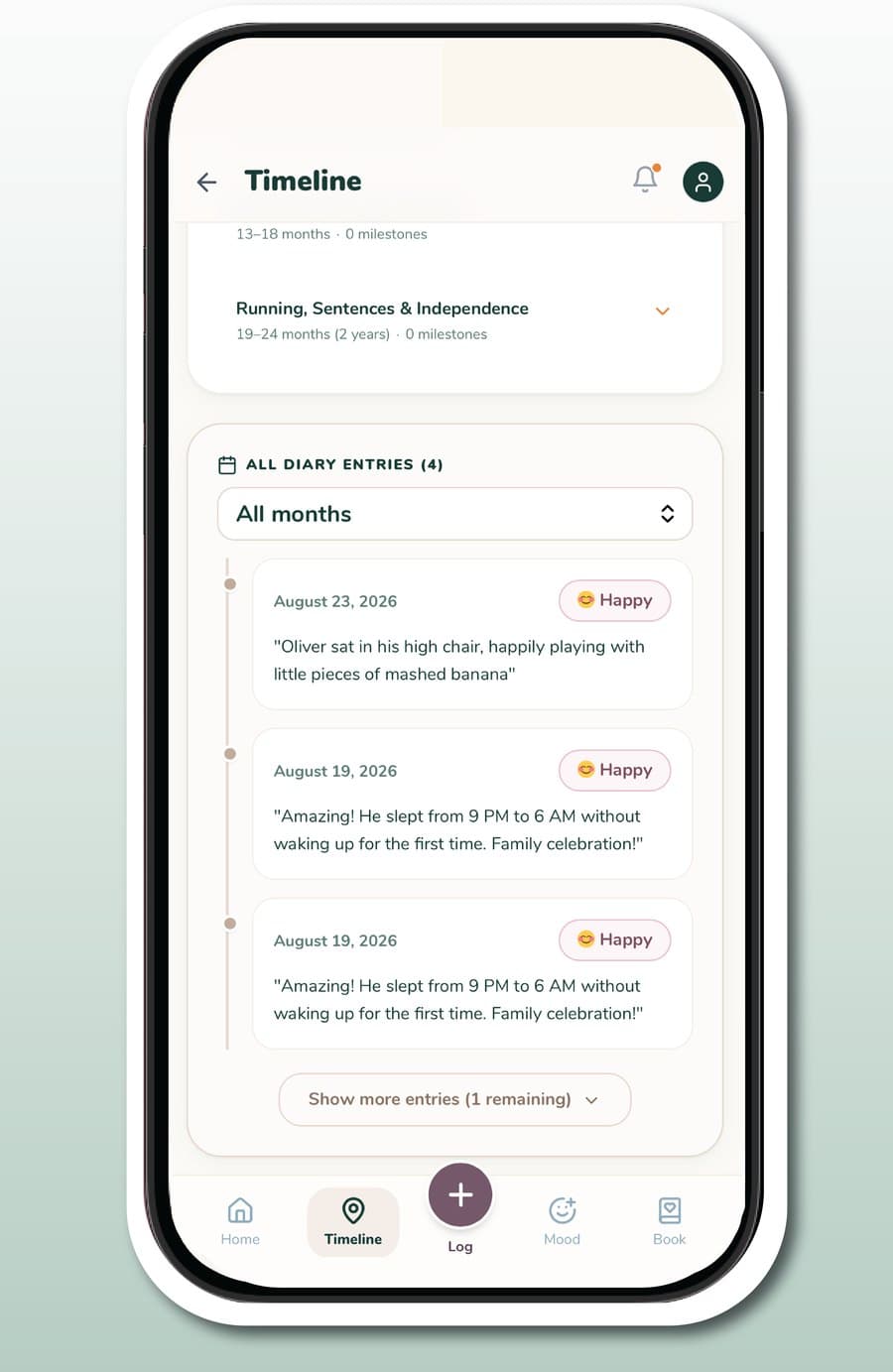
Timeline — information organized across the child's story
Explore Baby Kangoo
The same foundation, seen from different perspectives.
A private space to organize a child's health and development story.
- Symptom and health records
- Development milestones
- Appointment preparation
- The family stays in control of the information
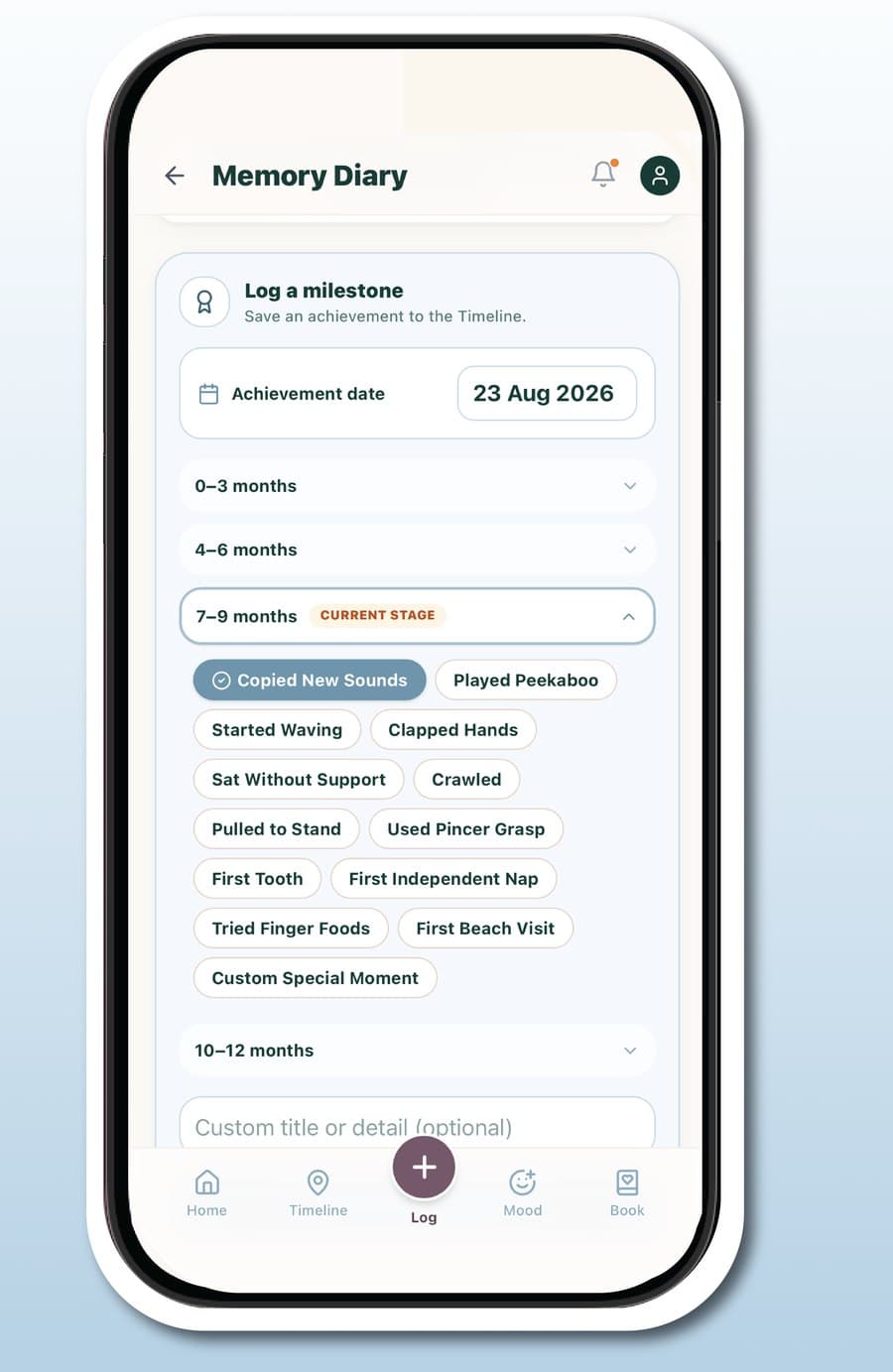
Development milestones, recorded by the family
Families arriving with more organized context.
- A summary prepared by the family
- Less time reconstructing history
- Clearer communication
- No access to data without consent
Support for continuity across different points of care.
- Information that travels with the family
- Less reliance on memory
- Smoother transitions between services
- A foundation for co-designing new flows
A flexible foundation, open to joint exploration.
- A platform already in production
- Architecture ready for co-design
- Open to defined pilots
- Privacy considered from the start
One child. One continuous story.
How information can travel with the family across the journey.
Before the appointment
The family gathers what happened since the last visit.
During the appointment
Organized context supports a more focused conversation.
Back at home
New information gets recorded, ready for next time.
Available today
- Health profile
- Symptom history
- Growth records
- Vaccination overview
- Appointment preparation
- Family-controlled information
Possibilities ahead
- Health timeline
- Emergency profile
- Period-based summaries
- Caregiver sharing
- Travel health summary
- Structured export
- Consultation preparation enhancements
- Condition-specific or care-pathway tools
Co-design and collaboration
We have built a flexible foundation and are open to co-designing family-facing tools around real needs identified by families and healthcare services.
Explore
Understand the needs of families, professionals and care services.
Prototype
Adapt or create a focused family-facing tool or care pathway.
Pilot
Test with a limited group, defined objectives and shared evaluation.
Privacy and safety
Family controlled
Consent based
European data region
Privacy by design
Could a family-held information layer support one of your care pathways?
We would like to explore where organized family-held information could improve preparation, continuity and communication between home and healthcare.
Founder and current stage
Cintia Pettersen
Design, digital products and communication for the pediatric space.
Current stage
A production platform, already used by real families.
Available languages
Portuguese, English and Norwegian (Bokmål).
Open to collaboration, validation and pilot projects.